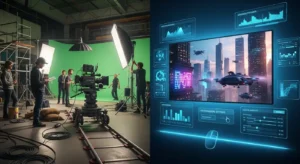
At Online Media Page, we’ve tracked the evolution of hardware from the early days of the HP TouchPad to the iPhone 15 Pro. But the biggest leap in 2026 isn’t in the devices we hold—it’s in the content we consume. AI video has moved from a grainy curiosity to a dominant force in viral media.
The 2026 Landscape: Beyond the OpenAI Sora Hype
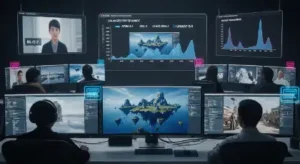 Early 2026 marked a massive turning point for the industry. While OpenAI’s Sora initially captured the world’s imagination, the landscape has fragmented into a highly competitive market. Tools like Runway Gen-4, Kling, and Luma now allow creators to generate 25-second, 4K-quality clips that obey the laws of physics with startling accuracy.
What makes 2026 different? Consistency. Previous AI models struggled to keep the same face or outfit across different shots. Today, “Character Libraries” allow influencers and brands to “cast” an AI character and use them in hundreds of different viral scenarios without ever picking up a camera.
Viral Trends: Why AI Video is Dominating Your Feed
Why are these videos suddenly everywhere? The answer lies in the economy of awe. AI allows for “Impossible Cinema”—visuals that would cost millions in Hollywood CGI but can now be prompted for the price of a monthly subscription.
- Surreal Nature: Viral “National Geographic-style” clips of neon-colored animals or gravity-defying landscapes.
- Digital Avatars: Influencers are now using “AI Twins” to post content 24/7. These avatars can speak 50 languages fluently, allowing a creator in Los Angeles to go viral in Tokyo and Madrid simultaneously.
- Historical Re-creations: “Candid” street footage of 1920s New York or ancient Rome, rendered with such fidelity that many users mistake them for restored archival film.
The Ethics of the “Uncanny Valley”: Can You Spot the Fake?
As AI video becomes the default for viral content, a new digital literacy is required. In 2026, “pixel peeping” is no longer enough. Modern deepfakes don’t just look real; they make sense. However, there are still “tells” that your eyes can catch if you know where to look.
How to identify AI-generated video in 2026:
- The “Pulse” Test: AI often struggles to simulate the subtle rhythmic change in skin color caused by a human heartbeat. If a face looks waxy or perfectly “still” in its texture, it’s likely synthetic.
- Physics Glitches: Watch for “occlusion”—when one object passes in front of another (like a hand waving in front of a face). AI still occasionally flickers or loses alignment during these complex overlaps.
- The Mouth Interior: While lip-sync has improved, the interior of the mouth (teeth and tongue) often appears as a single, blurred structure rather than individual, realistic parts.
- Background Gibberish: Look at signs or text in the distance. AI video generators often render “dream-logic” text that shifts or looks like alien runes when you freeze the frame.
“In 2026, the question is no longer ‘is this real?’ but rather ‘does it matter if it isn’t?’ The value of media has shifted from its origin to its impact.”
The Future: From “Watching” to “Generating”
 We are moving toward a world of Personalized Media. By the end of 2026, experts predict that social media platforms will integrate “Live Prompting,” where users can change the ending of a video or the outfit of an influencer in real-time. The “Online Media Page” of the future won’t just report on what was made—it will help you generate what you want to see.
Conclusion: Embracing the Synthetic Era
AI-generated video isn’t just a trend; it’s a fundamental shift in the architecture of the internet. While it brings risks of misinformation, it also unlocks a level of human creativity that was previously gated by massive production budgets. Whether you are a digital marketer looking to scale or a casual viewer, understanding the “how” behind the “wow” is the most important skill in 2026.