The Mechanics of Zero-Click AI Answer Engines
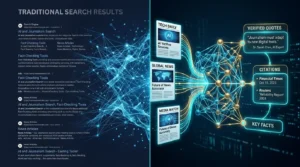
Understanding how to preserve traffic requires analyzing why user behavior has shifted so rapidly. Traditional search engines functioned primarily as indexing indexes, matching user queries against web document keywords and ranking pages by link equity and domain relevance. Generative answer engines operate on an entirely different layer.
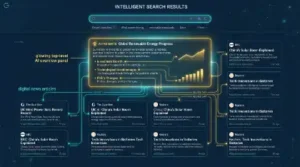
When a user submits a query, generative systems execute real-time retrieval-augmented generation (RAG). The engine scans hundreds of top-ranking web documents, parses key facts, extracts direct quotes, and synthesizes a single, cohesive narrative at the top of the viewport. The primary result is no longer a list of destinations—it is a self-contained answer.
Because the AI answers the user’s query directly within the interface, standard informational queries (“How does X work?”, “What are the rules of Y?”, “Best ways to do Z”) suffer the highest drop in referral click-through rates (CTR). Users get the context they need in seconds without ever landing on a publisher’s domain. For media sites reliant on ad impressions from high-volume informational traffic, this shift presents an immediate operational challenge.
From SEO to GEO: What Digital Publishers Must Change
Generative Engine Optimization (GEO) is not about abandoning traditional technical health or mobile responsiveness; it is about changing how your editorial team structures information so AI systems choose to reference and link to your brand within synthesized answers.
AI models prioritize clarity, verifiable authority, and structured data over keyword density. Here is how publishers can optimize their content architecture for generative engines:
1. Authoritative Data and Original Citations
Generative engines are designed to reduce hallucination by grounding their answers in verified, high-authority sources. Articles that contain original survey data, proprietary industry statistics, expert interviews, or original field investigation are exponentially more likely to be cited in AI search overlays. Generic summaries written from secondary research offer zero unique value to an AI parser and are quickly overlooked.
2. Direct “Bottom-Line Up Front” (BLUF) Writing
AI answer engines heavily reward content that gets straight to the point. Placing clear, authoritative definitions, bulleted summaries, or direct answers at the beginning of article sections makes it effortless for web crawlers to parse and extract your insights. Once the AI extracts your core premise, it cites your article as the source material for deeper reading.
3. Deep Semantic Entity Linking and Schema
Technical metadata is more critical now than ever before. Utilizing comprehensive schema markup (including NewsArticle, Article, Author, Organization, and FAQPage) provides AI models with explicit machine-readable context. Clearly defining author credentials, publication entities, and topic taxonomies establishes the trust signals required for AI engines to validate your site as an authoritative industry reference.
Building Direct Audience Channels

Relying 100% on search algorithm referral traffic has always carried risk, but in the zero-click era, it is a liability. The most resilient media brands are aggressively building owned media channels that bypass search intermediaries entirely.
- Email Newsletters as Core Products: Newsletters are no longer just traffic drivers back to a website; they are standalone publications that build direct daily habit loops with readers.
- Niche Community Spaces: Building subscriber-only forums, dedicated Discord servers, or private member networks creates sticky, high-retention environments that search engines cannot replicate or intercept.
- Direct App and Push Ecosystems: Mobile apps and desktop web push notifications give publishers a unencumbered pipeline to alert loyal readers about breaking news and exclusive deep-dives instantly.
Monetization and Editorial Pivot Strategies
As raw pageview volume from broad, top-of-funnel informational queries declines, media networks must pivot their content mix toward high-intent, highly nuanced topics that generative models cannot easily summarize in a quick text block.
| Traditional Search Strategy | Generative AI Era Strategy (GEO) |
|---|---|
| Targeting high-volume, generic informational keywords | Targeting complex, opinionated, or experience-driven queries |
| Rewriting top-ranking search results for organic reach | Publishing proprietary research, interviews, and primary sources |
| Optimizing solely for referral clicks and ad impressions | Optimizing for AI brand citations, newsletter signups, and subscriptions |
| Publishing broad “What is X?” overview articles | Publishing deep-dive case studies, technical breakdowns, and analysis |
When readers seek deep analysis, nuanced debate, personal narratives, or expert critical reviews, a synthesized AI paragraph falls short. Audiences actively seek out human perspective, editorial voice, and trusted expertise when decisions carry high stakes. Media companies that invest heavily in authentic human voice and specialized subject matter expertise will retain high-value, highly engaged audiences.
Final Outlook for Digital Media Networks
The rise of Search Generative Experience and zero-click AI search engines is not the death of digital publishing—it is an evolution. While the era of passive organic traffic from basic definition queries is rapidly fading, it opens significant opportunities for agile publishers. By adopting Generative Engine Optimization tactics, embedding rich structured data, producing original investigative insights, and nurturing direct subscriber relationships, online media platforms can secure their brand presence inside AI search results while building a far more sustainable, direct-to-audience digital business model.